
Part 1 of 3 | The Answer Might Already Be Sitting in Your Classroom
One of the things I value most about the Learning MATTERS community is that we never stop asking questions.
Some of us have been exploring structured literacy, implementation science and the science of learning for many years. Others are just beginning that journey. Regardless of where we are, we all share the same purpose: improving outcomes for learners through evidence-informed practice.
Our Learning is Learning Symposium was a wonderful opportunity to bring that community together. Thank you to everyone who joined us, contributed to the conversations and so generously shared your thinking throughout the day.
Over the next few weeks, we'd like to revisit three ideas from the symposium that have stayed with us.
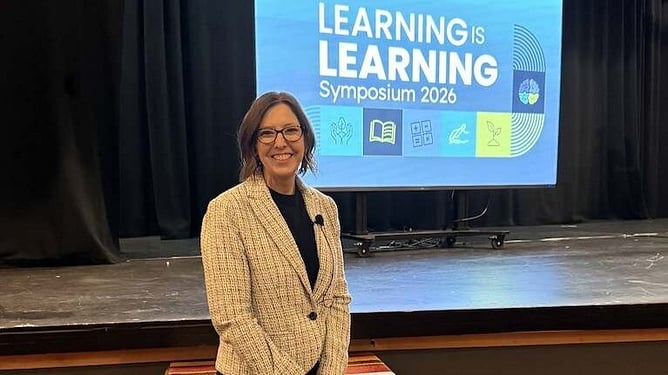
The first comes from Dr Sarah Brown.
Sarah is internationally recognised for her work in Multi-Tiered Systems of Support (MTSS). While MTSS is often associated with intervention, Sarah challenged us to think much more broadly.
Her opening statement set the tone for the entire keynote.
"MTSS is not about interventions."
At first, that might seem surprising. After all, many of us came to MTSS because we wanted to improve intervention. But Sarah reminded us that MTSS is actually a framework for building coherent systems that support both teachers and learners. It helps schools organise curriculum, assessment, instruction, intervention and professional collaboration so that every learner has the greatest opportunity to succeed. Intervention is one important part of that framework, but it is not the framework itself.
One of the most thought-provoking parts of Sarah's keynote centred on the questions we ask. As teachers, we naturally begin by asking:
Which students need extra help?
Sarah was clear that this is exactly the right question. It is the question every teacher should ask when looking at classroom data. The challenge is that, too often, it becomes the only question we ask. School leaders also need to ask system-level questions.
Do we have more students needing support than our current system can effectively serve?
What is our data telling us about the effectiveness of our Tier 1 instruction?
What aspect of our system needs strengthening so that more learners experience success before intervention is required?
Those questions change everything. Sarah illustrated this with a practical example that I suspect resonated with many people in the room. Imagine an intervention group of six students.
If four students are making strong catch-up growth and two are not, then our attention should rightly turn to those two learners. What additional support do they need? How might we intensify instruction? What barriers still exist?
However, if four or five students in that same group are not making expected progress, the conversation changes. That is no longer primarily about individual learners. It is a signal that we need to examine the system.
Is the intervention sufficiently intensive?
Is it being implemented as intended?
Are students receiving enough opportunities to practice?
Or should we be looking further upstream and asking whether Tier 1 instruction can be strengthened so fewer learners require intervention in the first place?
She also reminded us that the MTSS pyramid is about resources, not students. We should never think of children as "Tier 2 students" or "Tier 3 students". Rather, Tier 2 and Tier 3 represent the additional resources we make available to accelerate learning when students need them. It is a subtle shift in language, but it reflects a much more responsive and strengths-based way of thinking about support.
Perhaps the most practical takeaway from Sarah's keynote was her challenge to think differently about intervention itself.
Historically, we've tended to respond to increasing numbers of learners requiring support by creating more intervention groups. Yet Sarah reminded us that schools have finite resources. There comes a point where we simply cannot continue adding Tier 2 and Tier 3 interventions without reducing their intensity and effectiveness.
This is where the idea of Tier 1 intervention becomes so important.
Tier 1 intervention isn't a separate programme or an additional layer of support. It is the deliberate strengthening of the instruction that every learner receives every day. Rather than asking how we can intervene with increasing numbers of individual students, we ask how we can improve classroom instruction so that fewer students require intervention in the first place.
In one classroom, that may mean adding an additional five minutes of supported oral reading practice across every classroom. For another, it could be strengthening explicit vocabulary instruction, deliberately embedding retrieval practice into daily lessons, or ensuring agreed instructional routines are implemented consistently by every teacher. Individually, these refinements may seem small. Collectively, they have the potential to improve outcomes for hundreds of learners.
That doesn't diminish the importance of targeted intervention. There will always be learners who require additional, intensive support. However, when our data tells us that significant numbers of students are struggling, the most efficient and equitable response isn't simply to create more intervention groups. It is to strengthen Tier 1 so that every learner benefits from higher-quality instruction. Targeted intervention then becomes exactly what it was always intended to be, supplementary support for the learners who need more, rather than the primary solution for large numbers of students.

As educators, our greatest opportunity to improve outcomes may not lie in expanding intervention. It may lie in continually strengthening the quality of teaching and learning that every student experiences, every day.
As you begin planning for the months ahead, perhaps this is a conversation worth having with your team.
When you next sit down with your assessment data, don't just ask:
Which students need extra help?
Also ask:
What is our data telling us about our system?
What is one aspect of our Tier 1 instruction that, if strengthened, would improve learning for every student?
The answer might already be sitting in your classroom.
To learn more, purchase a copy of Sarah’s MTSS book here.